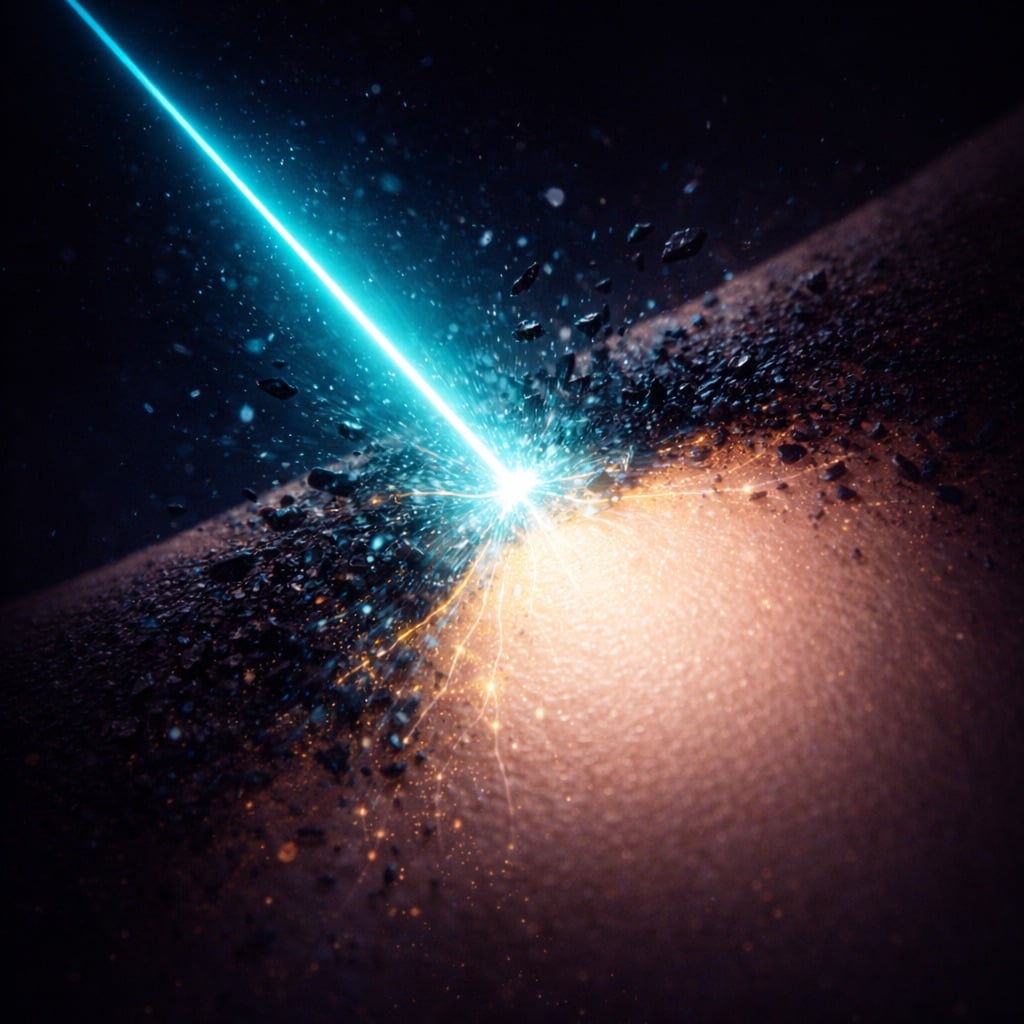
We Do Not Bleach. We Blend.
A multi-layered pigment correction and protection protocol — precision lasers, intelligent peels, biologic translators, and IV pigment discipline for all skin types.
Decode Your PigmentSystem Philosophy
Pigment is not a flaw. It’s memory. And memory can be rewritten.
LUMICODE™ is not a single product or procedure — it's a multi-layered epigenetic reset for hyperpigmented or tone-impaired skin. In the AETHRAFORM Method, pigment is viewed as epigenetic noise — the result of trauma, inflammation, and hormone-driven memory. Rather than bleaching the skin, LUMICODE™ reprograms that memory. Each element (laser, peel, exosome, peptide, and IV infusion) delivers a biological code that rewrites the skin's behaviour, leaving “lumination,” not simply lightening.
Designed for all genders and all skin types, LUMICODE™ targets hyperpigmentation in facial, intimate, perianal, and areolar zones. It replaces trauma, oxidative stress, and hormonal melanin surges with regenerative signals. Beyond pigment correction, LUMICODE™ also improves skin texture and reduces ingrown hair issues — since the laser energy targets follicles alongside melanocytes, patients experience smoother, clearer skin in treated zones. This system is grounded in the AETHRAFORM Method pillars — coding trauma, suppressing chaos, locking collagen, restoring energy, and ascending the result.
“We blend, we don't bleach.”
Trinity™ Pigment Revision Protocol
A three-step laser sequence performed every 3–6 weeks. Each component addresses a different layer of pigment formation and skin renewal.
Aerolase® 1064 nm Nd:YAG
Deep pigment suppression
Delivers deep, pain-minimal photothermal energy to suppress melanocyte activity and reduce vascular contributions to pigment. Near-zero PIH risk in all Fitzpatrick types.
MOXI® 1927 nm Thulium
Mid-depth pigment refinement
Non-ablative fractional laser that creates microscopic zones of coagulation, resurfacing the epidermis and clearing superficial pigment. Safe across all Fitzpatrick levels.
Pico 532 nm (Rohrer)
Surface chromophore disruption
Photo-acoustic pulses shatter melanin clusters without thermal damage — a non-thermal polisher that finishes what heat-based lasers leave behind.
+ LUMICODE™ Peel (RevFresh Peel™ by ReveSkin)
After the laser stack, a chemical peel reinforces pigment clearing without adding trauma. TCA 6%, Salicylic acid 20%, Retinoic acid 0.1%, Kojic acid 4%, Arbutin 7%, Licorice root extract, and Mandelic + Lactic acids 10%. Safe for darker skin, synergises with laser by dissolving remaining pigment clusters and calming inflammation.
“Applied gently in-office, LUMICODE™ PEEL is quiet power — engineered radiance that rewrites your tone without trauma.”
+ Biologic Boost: Exosomes + PRP Micro-Injections
Following the laser and peel sequence, the biologic boost completes the Trinity session. BioRein™ exosome serum is applied topically to flood treated tissue with regenerative growth factors. Simultaneously, PRP (platelet-rich plasma) micro-injections deliver concentrated healing factors directly into the dermis — accelerating re-epithelialisation, calming inflammation, and anchoring the pigment reset at the cellular level.
“This isn't a laser treatment. It's pigment reprogramming — from dermis to DNA.”
Fitzpatrick-Adapted Protocols
Every protocol is customised to skin type, history of melasma or hormonal pigmentation, and the anatomical zone being treated.
Fair Skin
Priming
2–4 weeks skincare prep
Trinity Stack
Full Trinity stack: MOXI + BBL HERO + Pico 532/1064 + microneedling + BioRein™
Safety Notes
Standard fluences; 532 nm pico freely used for lentigines; BBL broad filter.
Cadence
Every 4–6 weeks
4–6 sessions
Medium Skin
Priming
4–6 weeks with oral TXA + topical suppression
Trinity Stack
MOXI (low density) + BBL (conservative) or Aerolase 1064 + Pico 1064 primary + microneedling + BioRein™
Safety Notes
Low fluence BBL; 532 nm only on discrete lentigines; patch test recommended.
Cadence
Every 6 weeks
4–6 sessions
Darker Skin
Priming
6–8 weeks mandatory; oral TXA 250 mg BID + KPV + strict SPF 50+
Trinity Stack
Aerolase 1064 primary + MOXI (ultra-low density) or Clear+Brilliant + Pico 1064 only + gentle microneedling + BioRein™ ANTIPIGMENT
Safety Notes
No BBL (swap to Aerolase Neo 1064); no 532 nm; add Enlighten Peel day 7–10; extend spacing.
Cadence
Every 6–8 weeks
6+ sessions
“Quiet before correction. Pigment is disciplined before we start — no laser is fired until the skin's pigment production is quieted and under control.”
Cadence Pathways
Four treatment tiers from full-protocol correction to maintenance membership.
LUMICODE ELITE™
Full Trinity laser stack + RevFresh Peel + BioRein™ Regenerator + SourceCode serums + GENESIS™ + STABILIS™ IVs + full EMERSKIN™ kit.
Ideal For
New patients with significant dyschromia or melasma; Fitz I–III.
LUMICODE CORE™
MOXI + Peel + MELANOX CODE™ IV + EMERSKIN™ two-product bundle + home regimen sheet + GHK peptide spray.
Ideal For
Maintenance patients or mild-to-moderate pigment; budget-conscious.
LUMICODE INTIMATE™
Full Trinity for genital, perianal, and areolar zones + BioRein™ ANTIPIGMENT + MELANOX CODE™ IV + intimate home add-ons.
Ideal For
Intimate-zone hyperpigmentation, friction-based pigment, all Fitzpatrick types.
LUMICODE MAINTAIN™
Monthly EMERSKIN™ product replenishment + quarterly Enlighten Peel + quarterly low-density MOXI or Clear+Brilliant polish.
Ideal For
Post-series graduates sustaining pigment discipline long term.
Typical Course
6 sessions at 3–6 week intervals
Customised to Fitzpatrick type, severity, and anatomical zone
Protocol Timeline
From priming through maintenance — the complete LUMICODE™ journey mapped week by week.
Priming Phase
Topical pigment suppressants (High Spot, retinoid), oral tranexamic acid (Fitz III+), KPV peptide (Fitz IV-VI), strict SPF 50+ discipline. GENESIS IV preload 5-7 days before first session.
Trinity Session + Peel + BioRein
Full Trinity laser stack (Aerolase 1064 + MOXI 1927 + Pico 532), RevFresh Peel, BioRein CORE exosome overlay, PRP micro-injections to treated zones, and MELANOX CODE IV infusion.
Acute Recovery
STABILIS IV (GHK-Cu, BPC-157, TB-500). BioRein ANTIPIGMENT topical. LED red-light therapy. Strict sun avoidance. Gentle cleanse only — no actives.
Active Homecare Protocol
Full 7-step EMERSKIN homecare regimen: Foaming Polish, AHA Pads, HYLA-A, Illuminating Mask, High Spot, Fusion Shield SPF 50+, and Oral Glutathione/NAC. Progressive pigment suppression between sessions.
Session 2 (Repeat Trinity)
Second Trinity session with Fitzpatrick-adapted adjustments based on response to Session 1. GENESIS IV preload 5 days prior. MELANOX CODE IV day-of. BioRein stack selection refined.
Series Completion Assessment
Full-spectrum pigment assessment after 4-6 sessions. Imaging comparison, patient satisfaction scoring, and pathway recommendation: continue, graduate to MAINTAIN, or add INTIMATE module.
LUMICODE MAINTAIN Membership
Quarterly low-density MOXI or Clear+Brilliant polish, Enlighten Peel, at-home pigment kits, product replenishment, and annual touch-up laser session. Pigment discipline is lifelong.
IV Pigment Library
Three systemic infusions that preload, protect, and recover — locking pigment discipline from the inside out.
GENESIS™ IV
The Preload Shield
Composition
NAD+ 250 mg, Vitamin C 25 g, Glutathione 1500 mg, Zinc 15 mg, B-Complex
Role
Saturates cellular reserves before the Trinity session begins. Pre-loads antioxidant defenses, replenishes NAD+ for DNA repair, and creates a systemic buffer against oxidative stress from laser energy.
Best Window
3–7 days before each Trinity session (PRIME phase)
Boosters
Selenium 200 mcg, Alpha-Lipoic Acid 300 mg
MELANOX CODE™ IV
The Pigment Firewall
Composition
TXA 500 mg, Resveratrol 100 mg, Glutathione 1000 mg, KPV 250 mcg, Zinc 15 mg
Role
Blocks melanogenesis before it begins and shifts pigment coding from reactive to regulated. Locks tyrosinase activity and prevents post-inflammatory hyperpigmentation systemically.
Best Window
PRIME phase and early STABILIS (day of and days 1–3 post-procedure)
Boosters
PDRN 10 mg IV, NAD+ 250 mg IV, BPC-157 500 mcg SC
STABILIS™ IV
The Recovery Lock
Composition
GHK-Cu 5 mg, BPC-157 500 mcg, TB-500 750 mcg, Epitalon 10 mg, Vitamin C 10 g
Role
Secures the acute recovery window (0–72 hours post-procedure). Accelerates re-epithelialisation, suppresses inflammatory cascades, and locks early collagen formation so laser-induced remodeling proceeds without complication.
Best Window
Day 0 (immediately post-Trinity) through Day 3
Boosters
Hyperbaric oxygen session, LED red-light therapy
Every LUMICODE™ session is bracketed by IV support — GENESIS before, MELANOX CODE during, and STABILIS after. No laser is fired without systemic protection.
BIOREIN™ — Biologic Translator
Post-code delivery stacks that translate trauma into ordered repair and pigment into memory retraining.
BIOREIN™ CORE
Composition
ADSC exosomes + growth factors
Primary Action
Rapid calm, wound ignition
Timing
Immediately post-energy/peel; Day 0–7
BIOREIN™ ANTIPIGMENT
Composition
Exosomes + GHK-Cu + Arbutin + Kojic + TXA
Primary Action
Melanin suppression and tyrosinase down-shift
Timing
Pre-Trinity priming; Day 3–21
BIOREIN™ NEUROCALM
Composition
Exosomes + BPC-157 + KPV + Oxytocin
Primary Action
Cortisol-linked inflammation reduction
Timing
Nightly in recovery; stress phenotypes
BIOREIN™ ADVANCED REGENERATOR
Composition
ADSC + PRF peptides + PDRN + TGF-β3
Primary Action
Scar remodeling, deep trauma repair
Timing
Day 2–14 then weekly pulses
“Pigment is memory. Memory can be rewritten.” BIOREIN™ locks new structure into place and stabilises collagen so results persist.
Target Areas
LUMICODE™ protocols address pigment across every zone of the body.
Face
Melasma, sun damage, post-acne hyperpigmentation, uneven tone
Neck & Décolletage
Solar lentigines, poikiloderma, red-brown discoloration
Hands & Arms
Age spots, sun freckles, photodamage
Intimate Zones
Genital, perianal, areolar hyperpigmentation
Axillae & Groin
Friction-induced darkening, hormonal pigment
Post-Surgical
PIH from procedures, scar-adjacent discoloration
Daily Homecare Protocol
After each session, patients follow an 8-week home regimen that maintains pigment suppression and encourages healthy turnover.
Foaming Polish
Gentle cleanse without disrupting barrier
AM + PMAHA Resurfacing Pads
Tone, exfoliate, fade pigment
2–3× per weekHYLA-A
Hydration + tone balance
PM onlyIlluminating Mask™
Regenerative pigment suppression
Every 3rd night for 2 weeks post-peel, then weeklyHigh Spot™
Targeted tyrosinase inhibition
AM + PM on pigmented zonesFusion Shield SPF 50+
Broad-spectrum photoprotection
Every morning, reapply q2h in sunOral Glutathione / NAC
Systemic antioxidant and melanogenesis suppression from within
Daily (500 mg Glutathione or 600 mg NAC)Critical Requirement
Broad-spectrum SPF 50+ sunscreen every morning is non-negotiable. Even visible light and heat can worsen melasma. Rigorous sun avoidance and protection is lifelong.
The LUMICODE™ Promise
Not bleaching. Not hiding. Recoded Illumination.
“LUMICODE™ is not about bleaching or hiding. It's about rewriting the story held in the skin — a complete Recoded Illumination™. Patients emerge with clarity in their intimate zones — not simply lighter skin, but luminescent confidence.”
By combining precision lasers, intelligent peels, biologic translators like BIOREIN™, system-wide IV support, and disciplined home care, LUMICODE™ delivers long-lasting, harmonious tone that honours the body's complexity. Each session builds on the last, compounding returns through the RECODEX™ ascension model.
Frequently Asked Questions
Answers to common questions about the LUMICODE\u2122 protocol.
Is LUMICODE™ safe for all skin types?+
Yes. LUMICODE™ protocols are Fitzpatrick-adapted from the ground up. Patients with darker skin (Fitz IV–VI) receive extended priming with oral tranexamic acid, KPV peptide, and strict SPF 50+ before any laser is fired. The Trinity stack is adjusted — Aerolase 1064 replaces BBL, and 532 nm pico is avoided entirely. Safety is non-negotiable.
Does the treatment hurt?+
Most patients describe LUMICODE™ sessions as mild warmth or light snapping. Topical numbing is applied before laser work, and the Aerolase Neo delivers 650µs micropulses that are significantly more comfortable than traditional lasers. The peel is a brief tingling. Any discomfort resolves within hours.
How many sessions will I need?+
A typical LUMICODE™ course is 4–6 sessions at 3–6 week intervals, customized to your Fitzpatrick type and severity. Fair skin may clear faster; darker skin requires more sessions with gentler settings and longer spacing. Maintenance via LUMICODE MAINTAIN™ keeps results stable long term.
How do I maintain results between sessions?+
The EMERSKIN™ homecare kit is essential. Daily SPF 50+ is non-negotiable — even visible light and heat can worsen melasma. The home regimen includes tyrosinase inhibitors (High Spot™), AHA resurfacing pads, and the Illuminating Mask™ for ongoing pigment suppression between in-office sessions.
Is there any downtime?+
Minimal. Most patients experience light pinkness and mild peeling for 2–5 days after a full Trinity session. The BioRein™ exosome overlay accelerates recovery significantly. You can return to work the next day with makeup if desired. Strict sun avoidance is required for 7–10 days post-treatment.
When will I see results?+
Improvements begin after the first session, with progressive clearing over 4–6 treatments. Most patients see significant tone improvement by session 3. The MELANOX CODE™ IV and BioRein™ ANTIPIGMENT stack accelerate results by suppressing pigment formation from the inside while lasers address existing pigment on the surface.
Patient Feedback
Anonymized feedback from LUMICODE™ patients — initials only, shared with permission.
“I had melasma for over a decade and nothing worked. The combination of the Trinity lasers with the MELANOX CODE IV was the first protocol that actually addressed the root cause. My skin tone is more even than it has been since my twenties.”
A.J.
Age 42 — LUMICODE ELITE™, 6 sessions
“As someone with darker skin I was terrified of lasers. The Fitzpatrick-adapted approach gave me total confidence. The extended priming phase made all the difference. Zero PIH, and my intimate zone pigmentation has improved dramatically.”
T.N.
Age 35 — LUMICODE INTIMATE™, Fitz V
“The homecare system is what sets this apart. The in-office treatments are excellent, but the daily regimen keeps everything progressing between sessions. I finally have a protocol I can sustain long-term.”
M.C.
Age 29 — LUMICODE CORE™, maintenance phase
Real Results
Before & After
Before & After Gallery Coming Soon
Clinical before-and-after imagery for LUMICODE™ pigment correction results will be available here. All images are shared with explicit patient consent.
The Ecosystem
Complementary Protocols
LUMICODE™ integrates with the broader AETHRAFORM ecosystem for complete skin and tone optimization.
Pigment Assessment
Decode Your Pigment Profile
Answer five questions to discover your recommended LUMICODE™ pathway — CORE, ELITE, INTIMATE, or MAINTAIN.
What type of pigmentation concerns you most?
How would you describe your skin tone?
How long have you had this pigmentation?
Where are you most concerned about pigmentation?
Have you tried pigment treatments before?
Get Your LUMICODE™ Pigment Guide
A free guide covering the LUMICODE™ protocol, Fitzpatrick-adapted treatment plans, homecare essentials, and what to expect at each session.
No spam. Unsubscribe anytime.
Begin Your LUMICODE Journey
Every pigment correction journey starts with a coded assessment. The clinical team will evaluate your Fitzpatrick type, pigment history, and treatment zones to design a personalised LUMICODE protocol engineered to your skin.

